


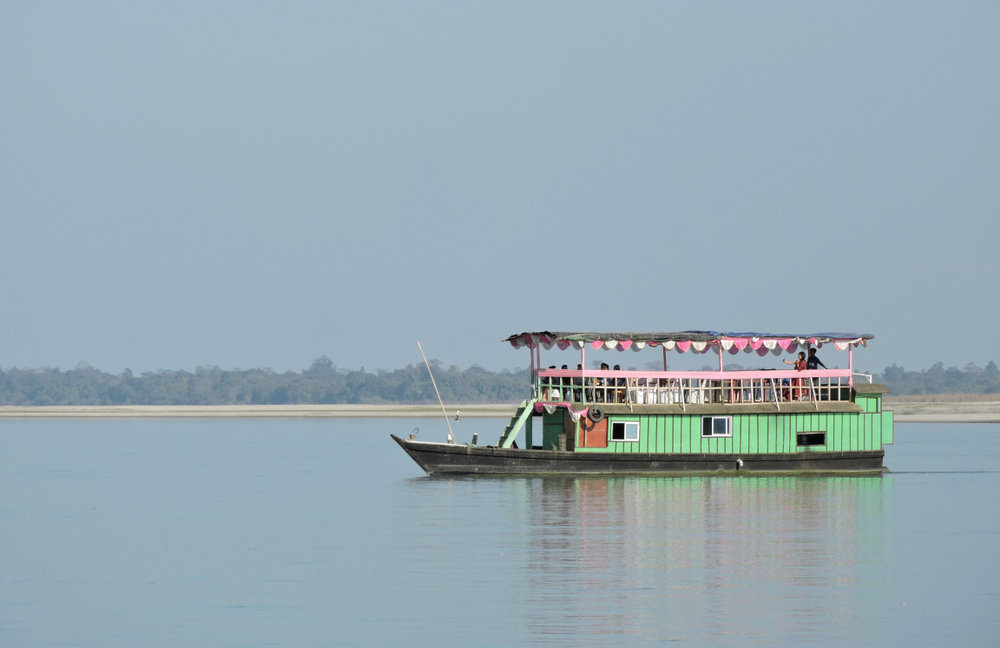
safari boat ride
- CruiseWhat the Jeep Can't Reach, the Boat Can.
Most people who've done a wildlife safari in India describe the same morning. Pre-dawn wake up. A jeep, a guide, a park gate opening at first light. Dusty tracks, other vehicles doing the same loop, the collective held breath when something moves in the treeline.
It works. Nobody is arguing otherwise.
What almost nobody talks about is the safari boat ride, the river-based alternative that puts the observer below the bank, removes the engine noise that announces a jeep from half a kilometre away, and opens up sandbanks, island margins, and shallow riverine habitat that no track was ever built to reach. Animals on the bank haven't spent years learning that a floating vessel means danger. The behaviour is different. The photographs are different. The whole morning is different.
The Numbers From Assam That Require a Second Reading
Kaziranga National Park holds approximately 2,600 one-horned rhinos, around 70% of the global population, in one park, on one river floodplain. Wild water buffalo, swamp deer, elephants, tigers alongside them. A bird list past 480 species. Migratory waterfowl from October through March in concentrations that make the wetland edges look like photography set pieces, except they're not set pieces. Just Tuesday morning on the right stretch of water.
The jeep safari into Kaziranga's designated zones is well-run and consistent. It also shares the morning with every other vehicle that booked the same slot.
The safari boat ride on the Brahmaputra works a different geography entirely.
What Happens When the Water Drops
Winter water levels fall and sandbanks emerge mid-river, temporary islands that appear for a few months and vanish when the monsoon returns. Those sandbanks are where Gangetic dolphins surface in the early morning. Where greater adjutant storks, critically endangered, wingspan that makes the word stork feel insufficient, gather in numbers ornithologists fly internationally to document. Where river terns work the shallows while the light is still low and the mist hasn't lifted.
No road goes here. The sandbank wildlife has almost no human contact outside the boats working this river. The behaviour is genuinely undisturbed in a way habituated park wildlife rarely is.
The Dawn Light Nobody Talks About
Low angle, water surface throwing light back upward, mist sitting above the river for the first hour after sunrise. Fishing cats on the bank margins. River otters moving through channels that see perhaps a hundred human visitors in an entire season. Gangetic dolphins surfacing in the deeper water between sandbanks with enough regularity that positioning the vessel correctly becomes a learned skill.
Wildlife photographers who've worked both jeep and river consistently return to the river dawn as the session producing portfolio images. Not because subjects are more spectacular, though dolphins surfacing in that light come close, but because the animals are behaving naturally, without a diesel engine twenty metres away registering as background noise.
The Vessel. The Operator. The Details.
M.V. Mahabaahu runs on the Brahmaputra, Adventure Resorts & Cruises Pvt. Ltd. behind it, operating October through March when the water is right, sandbanks exposed, migratory birds present.
Small ship. Boutique operation. The upper deck is a dedicated wildlife viewing platform, elevated above bank vegetation, stable enough for serious long lens work, quiet in a way no jeep safari achieves. Early morning sandbank positioning is built into the itinerary, not treated as a bonus. Kaziranga jeep safaris coordinate directly off the vessel for the park zone access that complements river work.
Cabins starting from Superior to Deluxe with private balcony, Luxury, and full Suites. Proper onboard dining, spa, Assamese cultural evenings. The comfort is genuine. The wildlife access is why serious safari travelers choose this over land-based alternatives at similar price points.
What the Guides Actually Know
The guides have been watching the same river across multiple seasons. Which sandbank the adjutants use in November. Where dolphins surface most reliably at 6 am. Which bank the elephants come down to at dusk. That knowledge doesn't come from a training manual. It accumulates from years on the same water watching the same patterns repeat and vary.
That's the difference between a guide who knows wildlife and a guide who knows this river.
Book directly through the Adventure Resorts & Cruises office in Faridabad. Have the conversation about timing before confirming dates, the Brahmaputra in October looks different from February, and wildlife priorities shift accordingly.
The Case for the River
The jeep safari built India's wildlife tourism reputation and deserves it.
But the safari boat ride on the Brahmaputra reaches the habitat the jeep was never designed to access, at the river's pace, in the river's silence, from a position that changes everything about what the wildlife does next.
Adventure Resorts & Cruises. M.V. Mahabaahu. October to March. The sandbanks are waiting