


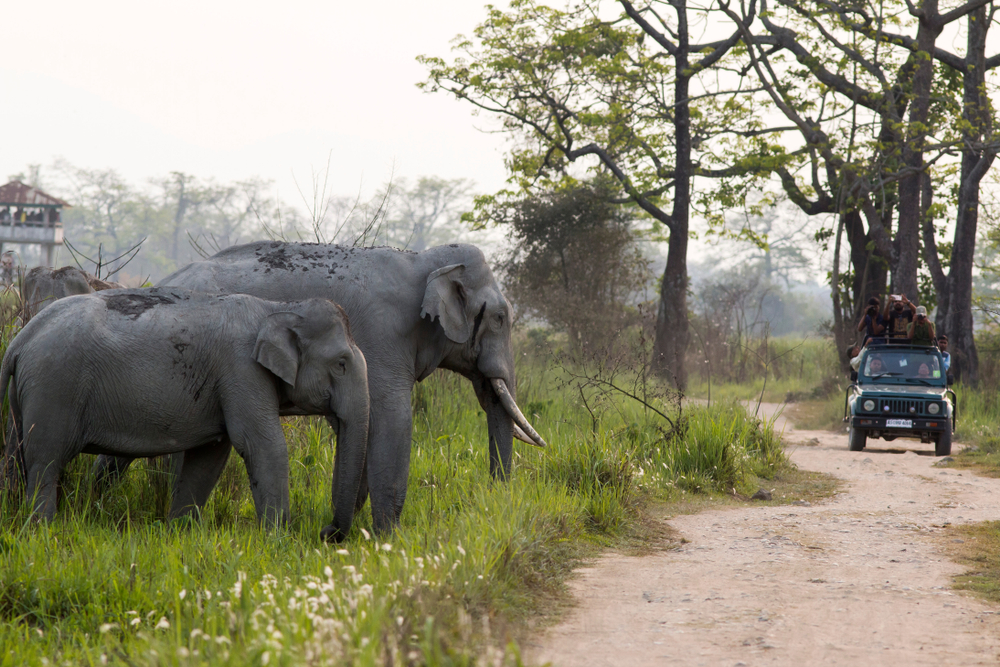
kaziranga jeep safari
- TravelKaziranga. One Rhino on the Bank. Nobody Else on the Track. That's the Morning.
There are wildlife experiences in India that get talked about constantly. Tiger sightings at Ranthambore. Elephant herds at Corbett. All of them real, all of them worth doing, all of them also shared with a significant number of other vehicles doing the same circuit at the same hour.
Then there's the kaziranga jeep safari.
Kaziranga National Park in Assam holds approximately 2,600 one-horned rhinos, around 70% of the global population, in one park, on one floodplain. That number requires a second reading. Wild water buffalo. Swamp deer. Tigers. Elephants moving through tall elephant grass in herds that make the vehicle feel very small. A bird list that serious ornithologists build dedicated trips around. All of it sitting in the Brahmaputra valley in northeast India, a region that the mainstream wildlife tourism circuit hasn't fully caught up with yet.
Which means the mornings here are quieter than they should be, given what's on offer.
What Kaziranga Actually Looks Like
The park divides into zones, Central, Eastern, Western, Burapahar, each with different terrain and different wildlife concentrations. The Central Range around Kohora is the most visited and produces the most reliable sightings. The Eastern Range near Agoratoli is quieter, larger, and where the landscape opens up enough to see the Brahmaputra wetlands properly. The Western Range at Bagori is known for tiger sightings with a frequency that surprises visitors expecting Kaziranga to be primarily a rhino destination.
It's all of the above simultaneously. That's the part that takes time to process.
The elephant grass in the Central Range grows to fifteen feet in monsoon. By winter it's been cut or burned and the visibility opens up dramatically, rhinos visible from distances that make the long lens feel excessive, the animals completely unbothered by a stationary jeep thirty metres away. They've been habituated to vehicles for long enough that the observation is genuinely unobtrusive. The wildlife behaves as wildlife rather than as performance.
The Kaziranga Jeep Safari: How It Actually Works
Kaziranga jeep safari slots are allocated zone-wise, morning and afternoon. Morning departures leave around 6 am and produce better sightings, lower light, cooler temperature, higher animal activity at the waterholes and grassland edges. Afternoon slots run from around 2pm and offer different light conditions and different behaviour patterns, particularly for the bird life that concentrates near the wetland margins in the late afternoon.
Jeeps enter in groups through designated gates and follow established tracks. The guides know the zones in the way that comes from years of daily observation, which waterhole the rhinos use at which hour, where the wild buffalo graze in December, the tree line that the elephants move along at dawn. Booking in advance matters, particularly for the Central Range morning slots which fill first and fastest.
The park is open roughly October through April. June through September, monsoon, the park closes as the Brahmaputra floods significant portions of the habitat. The animals move to higher ground. The water recedes. October arrival sees the landscape still green from the rains, the grasslands tall, the wildlife returning to its winter patterns.
What the Jeep Misses, And What the River Finds
The kaziranga jeep safari covers the park zones. The river doesn't have a gate.
The Brahmaputra runs along Kaziranga's northern boundary and the riverine habitat it creates, the sandbanks, the islands, the shallow margins, is a separate ecosystem from the grassland zones the jeep tracks cover. Winter water levels drop and sandbanks emerge mid-river. Those sandbanks are where Gangetic river dolphins surface. Where greater adjutant storks, critically endangered globally, gather in concentrations that ornithologists fly internationally to document. Where the river terns work the shallows while the rest of the park is still waking up.
No jeep track reaches a mid-river sandbank at 6 am. A vessel does.
The combination of jeep safari into the park zones and river-based observation from the Brahmaputra gives Kaziranga in full rather than Kaziranga in part. Both access points are necessary. Neither is sufficient alone.
The Silent Trailblazer of India’s River Cruises, And the Kaziranga Connection
Adventure Resorts & Cruises Pvt. Ltd. has been running river operations on the Brahmaputra since more than two decades. M.V. Mahabaahu, our Assam vessel, operates in the same geography that surrounds Kaziranga. The river the vessel moves through is the same river that defines the park's northern boundary and creates the habitat that the jeep safari doesn't access.
This is not coincidental. The itinerary on M.V. Mahabaahu is built around Kaziranga in a way that treats the jeep safari and the river observation as complementary rather than competing. Guests take the jeep safari into the park zones, coordinated through the cruise, guides arranged, timing built around the morning slot that produces the best sightings. The river work happens from the vessel's upper deck, which functions as a dedicated wildlife viewing platform elevated above the bank vegetation.
The practical result:
A single Kaziranga trip that covers both the grassland rhinos visible from a stationary jeep in the Central Range at dawn and the river dolphins surfacing on a sandbank the same morning while the vessel holds position in the current.
Cabin categories on M.V. Mahabaahu run from Superior through Deluxe with private balcony, Luxury, and full Suites with private dining. Spa onboard. Assamese cultural programmes in the evenings. The comfort is genuine and the wildlife access is why serious wildlife travelers book it specifically rather than defaulting to a land-based Kaziranga lodge.
Our guides have observed this river through every season, the sandbanks where adjutants gather in November, the spots where dolphins surface most reliably at first light, and the banks where elephants descend at dusk. This understanding is built over years on the same waters; it can’t be taught through any manual.
Make direct bookings through our website. The pre-booking conversation about timing and wildlife priorities is worth having, October to March marks the main window, but the Brahmaputra in October feels very different from February, and the distribution of wildlife shifts with the changing season.
At the End!
The kaziranga jeep safari is one of the genuinely great wildlife experiences available anywhere in Asia. The rhino density alone justifies the journey to northeast India before the buffalo, tigers, elephants, and bird life enter the picture.
The Brahmaputra running alongside the park boundary is the extension of that experience that most Kaziranga visitors never find. The sandbanks. The dolphins. The greater adjutants in numbers that make the global population statistics feel implausible until they're visible from a boat deck at dawn.
Adventure Resorts & Cruises puts both in the same itinerary. The jeep goes into the park. The vessel works the river. Kaziranga in full, not just the part the track reache.