


bengal village life: slow & simple living
- CruiseBengal's Villages Haven't Changed the Way Everything Else Has. That's Exactly the Point.
Modern India moves fast. The cities are faster still. But travel an hour outside Kolkata in almost any direction and the pace shifts completely, paddy fields replace flyovers, the sound of the river replaces traffic, and the rhythms of Bengal village life arrive in a way that feels less like stepping back in time and more like stepping sideways into a version of the country that the development conversation forgot to disrupt.
That's not romanticisation. It's geography. Bengal's villages, built along rivers, shaped by floods and harvests, held together by customs that predate the state they sit in, operate on a timescale that tourists from Delhi or Mumbai find genuinely disorienting at first and genuinely difficult to leave afterward.
What Bengal's Villages Actually Look Like
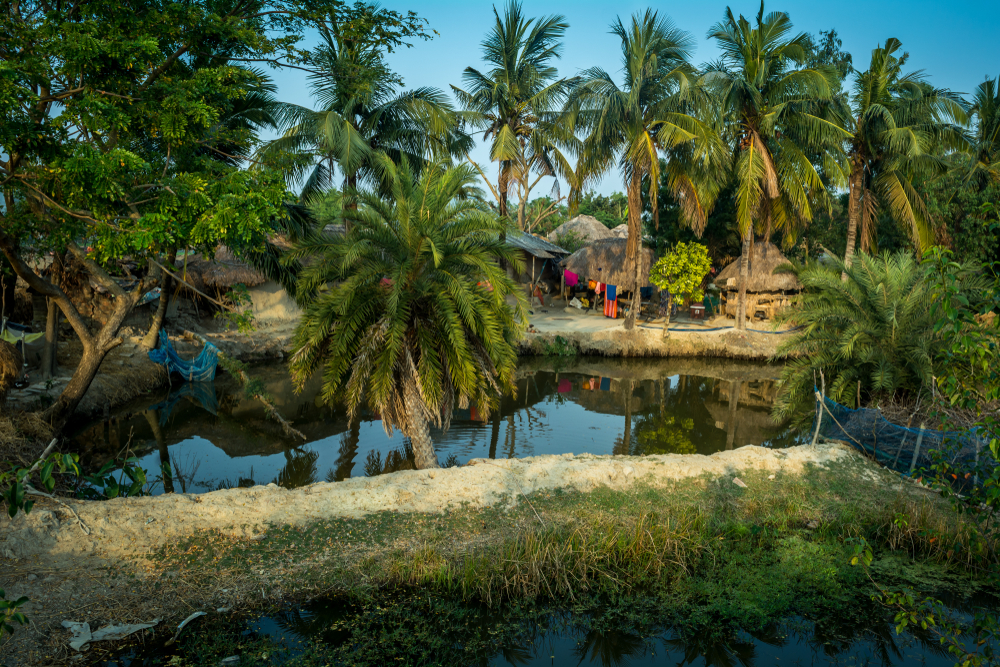
The landscape is water. That's the first thing to understand. Rivers, canals, ponds, wetlands, Bengal's rural geography is defined by the relationship between land and water in a way that most of India's other regions aren't. Villages don't sit beside the water. They sit inside a water landscape, connected by boat as much as by road, shaped by monsoon and river behaviour in ways that determine architecture, agriculture, and daily routine simultaneously.
The houses in the older villages, terracotta tile roofs, mud walls that stay cool through summer, courtyards shared between families who've lived beside each other for generations, are built with an understanding of the climate that contemporary construction has largely abandoned. The ponds in the centre of most villages serve functions simultaneously: fish farming, laundry, bathing, irrigation. Multiple purposes, one body of water, an efficiency that wasn't designed so much as evolved.
The people. Bengal has a specific cultural density, literature, music, craftsmanship, religious tradition, that concentrates in its villages in a way that urban Bengal sometimes dilutes. The Baul musicians who wander between villages carrying their ektara and their philosophy. The potters of Bishnupur working terracotta that's been shaped the same way for three centuries. The weavers of Shantipur produce Jamdani that UNESCO has listed as intangible cultural heritage. These traditions exist because the villages that sustain them still exist.
The Festivals That Make Bengal Village Life Visible to Outsiders
Durga Puja is the obvious entry point, ten days in October when Bengali identity expresses itself collectively and completely, the village pandals competing on artistry rather than scale, the community meals and the immersion processions and the music that runs continuously for days. Experiencing Durga Puja in a village rather than Kolkata is a different thing entirely. Less spectacular visually, considerably more human.
Poush Mela in Shantipur in December, the folk music festival where Baul singers gather and perform through the night in a setting that hasn't changed meaningfully in decades. The harvest festivals. The boat races on the rivers in monsoon when the water is high and every village turns out to watch. These are the calendar moments when Bengal village life becomes most legible to visitors who haven't grown up inside it.
The River as the Real Village Road
Bengal's villages were connected by river before roads existed and many of them are still better understood from the water. The Hooghly, the Damodar, the Rupnarayan, the rivers of the Sundarbans delta, each one with a different character, different bank life, different relationship to the communities that built themselves along its edges.
Watching Bengal village life from a river is watching it correctly. The ghats where the day begins, washing, prayer, the first boats pushing off into the current. The markets that appear at the river edge in the morning and dissolve by noon. The children swimming in water their parents and grandparents swam in. The fishermen working nets that their families have worked for generations. All of it visible from the water in a way that road travel misses entirely.
Seeing the Bangladesh Route: Where Adventure Resorts & Cruises Fits In
The Brahmaputra flowing from Assam into Bangladesh creates a river route that crosses the border and moves through a landscape where the Bengal village life on both banks tells a connected story despite the political line between them.
Adventure Resorts & Cruises Pvt. Ltd. operates a cross-border cruise on exactly this route, the India-Bangladesh itinerary via the Brahmaputra that is niche enough that most travel agents have never booked it and rare enough that the travelers who do book it describe it as one of the more genuinely unusual journeys available in South Asia.
The vessel is M.V. Mahabaahu, small ship, boutique operation, cabin categories from Superior through Suite with private dining. The experience design combines river travel with village visits and cultural immersion stops along the route. Not a sightseeing cruise that passes villages from a distance. An itinerary built around actually stopping, disembarking, spending time in the communities the river connects.
The Bangladesh stretch of this route passes through a Bengal that international travelers almost never see, river delta landscape, village ghats, the cultural geography of a region that is historically and linguistically the same as West Bengal even when the passport stamps differ. The water carries the same silt. The villages on both banks recognise the same festivals.
For the traveler whose interest in Bengal goes beyond Kolkata's heritage buildings and extends to the river culture and village life that shaped everything the city eventually became, this route, on this vessel, run by an operator that has been on these waters long enough to know which stops matter, is the trip worth building.
Direct bookings through the Adventure Resorts & Cruises website. The conversation before booking is worth having, the cross-border itinerary has specific documentation requirements and seasonal considerations that the team navigates with the traveler rather than leaving to discover on arrival.
Sums Up
Bengal village life is not a museum exhibit and not a tourist attraction. It's a living system, water, agriculture, craft, music, festival, community, that has been adapting to the Bengal landscape for centuries and is still doing so. The travelers who find it tend to find it unexpectedly, through a detour or a recommendation or a river route that puts them somewhere roads don't go.
The Brahmaputra into Bangladesh, on a small vessel run by people who know the water, with village stops built into the itinerary rather than observed from a distance, that's one of the more direct routes into Bengal that persists underneath the version most travelers see.
Worth finding before the detour becomes a main road